Sand/Salt Mix (Pickled Sand) for an Icy Gravel Driveway: What I Use and Why
This is for anyone with a gravel driveway in an Ontario winter, especially the long rural driveways where you've got a hill, a bad corner, or a stretch at the road that turns to ice every year. Straight salt and ice melters don't do much on gravel. Here's what I use instead, how it comes, and how to get through the winter with it.
Quick answers
On gravel, I use a sand/salt mix (also called pickled sand), not straight salt. Straight salt melts through the ice and ends up down in the gravel, and you still have no traction.
The mix is typically 1 part salt to 8 or 10 parts sand. The sand is for traction. The salt keeps the sand from freezing, and once it's down it helps break up ice and hard-packed snow.
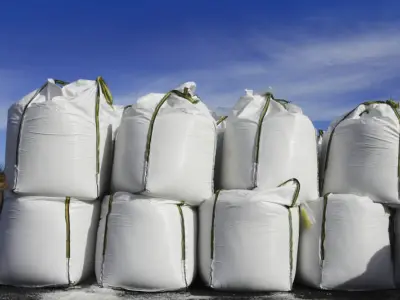
Plain sand freezes into one big lump. Sand/Salt mix in a 1-yard bag beside the driveway can remain useable all winter.
On a long rural driveway, put a bag at the road, one near the house, and one at any hill or bad spot. Throw it out as needed and order more as needed.
Put it down as needed on slippery sections, not before a snow or a thaw. Keep the snowbanks pushed back so they don't melt onto the driveway and turn it into an ice rink.
Sand/salt comes loose by the tonne, in 20 kg bags from a hardware store, or in 1-yard bags. It's cheaper than straight salt or ice melters, and on gravel you use less of it.
What should I put on an icy gravel driveway?
A sand/salt mix also called pickled sand. It's sand with a small amount of salt mixed in, and it is my first choice for traction on a slippery gravel driveway.
A sand/salt mix is primarily used on a gravel driveway for the traction sand provides rather than melting. The main purpose of the salt in the mix is to keep it from freezing in storage. This allows the sand to spread on the driveway. The melting benefits of the salt are limited because it generally just melts through the ice or hard-packed snow leaving a tiny hole. The sand remains on the slippery section as traction.
The sand does a bit of melting on its own, too. On a sunny day it soaks up heat from the sun and melts the ice or hard-packed snow it's sitting on. As it melts, it burrows down and leaves little holes. That breaks the ice up, and the broken-up surface still gives you a reasonable amount of traction. Sometimes you'll need to put more down.
Once the mix is spread out, it doesn't matter if the sand freezes on top of the ice. The salt still helps a little once it's down, breaking up ice and hard-packed snow, but that is minimal. The big job is keeping the sand loose in the bag or the pile so you can shovel it and spread it.
Sand/salt or straight salt: which is better on a gravel driveway?
There aren't many cases where I'd use plain salt or treated salt on a gravel driveway instead of the sand salt mix. Two reasons beyond being much more costly.
First, salt on its own melts a hole through the ice and ends up down in the gravel. The amount you'd need for it to actually do anything is very high, and it doesn't help with traction once it has melted through.
Second, you want the gravel itself to stay frozen. Using the amount of straight salt needed would thaw the top layers of the gravel. Then when you plow it or blow it, you are risking plowing or blowing the loose/softened up gravel.
Asphalt is the other way around. Salt is a much better choice there. It melts down through the ice, hits solid asphalt, and melts from the bottom up. On gravel there's no solid bottom, so the salt just falls through and stops working. Asphalt driveways are a different strategy, and I'll cover them in another article.
What about ice melt, calcium chloride or magnesium chloride?
They work much the same way salt does, so on gravel they land in the same spot as straight salt. They melt through, are much more costly and you still don't have traction.
On how well they work and what they cost, they're just not the choice for a gravel driveway. For gravel, a sand/salt mix is the better pick.
What's the ratio in a sand/salt mix?
Commonly about 1 part salt to 8 or 10 parts sand. It varies, because the mix is made up in bulk. Some applications run a higher percentage of salt, but that's not the common situation.
Is sand/salt cheaper than salt?
Yes. Sand/salt is cheaper than straight salt or ice melters. On a gravel driveway you also use less of it by volume to get the traction you need. So for gravel, it's the most cost-effective option.
That's not necessarily true for an asphalt driveway, for a few different reasons. I'll get into that in the asphalt driveway article.
How does sand/salt come?
Three common ways: loose (bulk), in 20 kg bags, or in 1-yard bags.
Loose. It comes in a dump truck, or you pick it up yourself in a trailer or a pickup. You store it outside, under a tarp or in some kind of covered box, and use out of the pile as needed.
20 kg bags. You pick these up at a hardware store. They're better for the smaller situation: a short driveway, or a bag to keep in the car.
1-yard bags. These get placed along the driveway, in the high-use areas or strategically, out at the road and up by the house.
On a larger driveway, the amount you'll go through makes it cost-effective to buy in bulk. That's either buying it by the tonne, delivered by dump truck and dumped, or going with the 1-yard bags.
How do I store loose sand/salt?
Keep it out of the weather. A tarp over the pile does it. So does one of the plastic sand/salt boxes you can buy, where you fill it up, then open the lid and take what you need.
The reason is moisture. Over time, moisture washes the salt out of the sand. It also makes the sand wetter, and wet sand freezes more easily and isn't as easy to work with. So keep it reasonably dry and not full of snow.
Should I keep a bag of sand/salt in the car?
It's worth doing. A 20 kg bag in the trunk means if you hit a spot where you need traction, you open it up and use part of the bag. Some people carry a 5-gallon pail with a lid instead. Either way, you can deal with it wherever you are, not just at home.
The rest of the bags can live at the house, in the garage.
Why 1-yard bags on a long driveway?
On a long rural driveway, a 1-yard bag is the easiest way to have sand/salt sitting right where you need it. I've seen a number of places start to do this, especially the longer laneways found in Simcoe, Muskoka, Grey and Bruce. Here's what I like about them.
They go where the trouble is. Out at the road, up by the house, at a hill, or at any spot that's particularly bad. Throw some out from the bag as needed, and get another one brought in when it runs low.
They close back up. The bag comes with a cover. Open it, get what you need, close it, and it stays fairly well out of the weather.
They're tidier than a loose pile. There's less to clean up than with loose sand/salt dumped beside the driveway. When the bag is done, there's no leftover pile and no spread-out sand to rake up off the grass in the spring.
You can move them. If you've got a tractor, with a trailer or a set of forks, you can shift them around as the winter goes on.
Does a 1-yard bag freeze if it sits outside all winter?
No. The salt in the mix keeps the sand from freezing, so a 1-yard bag of sand/salt can sit alongside your driveway all winter and stay usable.
The sand may crust a little, but the whole bag won't freeze solid. Usually it's not so hard that you can't hit it with a shovel and break it up.
Where do I put the bags on a long driveway?
Wherever you're likely to have trouble. On a typical flattish, long, farm-style driveway, that's one bag out by the road and one up near the house. Those are the two places where you'll have the most issues and be most concerned about it.
The road end can be the iciest part of the driveway, for a few reasons. It's where you stop and start, so somebody spins a little, and that ices it up. If it's an asphalt road that's plowed and salted, you get melting that flows onto the end of your driveway, from the heat off the road and from the road salt. And lots of laneways have a grade up to the road, sometimes a fairly steep one, right at the last bit.
That's a bad mix right where you sit and wait for traffic to clear. You want to be able to pull up to the edge of the road and then start without spinning. A bag at the gate means you throw a bit out there and you're not stuck trying to get out.
On the flat stretches, if you're plowing or blowing, you're generally not going to have any real issues. The exception is a driveway in poor condition, where ruts or poor drainage leave icy spots. Put a bag at those spots and deal with it as needed.
How far apart the bags go depends on the size of the driveway and the situation.
Should the bag go at the top of the hill or the bottom?
If you had the choice and it didn't matter, one at the top and one at the bottom. In most cases, though, you can walk the hill, and you won't need two bags' worth of sand on it.
Here's the thinking. Say the hill goes up as you leave the house. With a bag at the bottom, you can sand your way up and get out, instead of walking up and sanding your way down. Coming in, you'd sand from the top down.
If it's a fairly long hill, or a really bad one, and you know you'll go through a lot of sand over the year, a bag at each end just means less distance to carry it. A lot of it comes down to the situation, how you're dealing with it, and what tools you're using.
How do people actually use the bags?
Mostly by hand. You throw the mix out from the bag onto the trouble spots with a shovel. Once a spot is sanded, it generally lasts till the next snow or melt and freeze cycle.
You're usually not sanding a couple of times a day. The exceptions are spring freeze-and-thaw, when it thaws and then freezes over top of the sand, or when it snows over the sand and then gets plowed or blown off. Then you redo it. On a rural driveway you're not generally sanding the whole thing anyway, only the trouble areas.
Some people put the bag on a little utility trailer behind a tractor. Then you sand out of the trailer as needed saving a lot of walking.
If you've got a small broadcast sander on the back of a tractor and you're shovelling into it as you go, that changes where you'd put your bags too.
How do refills work?
When a bag is running low, you order another one and have it placed to replace it. That's it.
Typically people get roughly what they figure they'll need for the year and have the bags all placed at once, because it keeps delivery costs down. How many that is depends on the winter and on what you're looking to do.
One thing to keep in mind: unless you can move the bags around with a tractor or something, you don't want them sitting there when you don't need them.
How much sand/salt do I need?
There isn't a real rule of thumb, because it depends so much on conditions. You put down enough to get traction. Sometimes that's just a little.
What it depends on:
The grade. A slight slope needs way less than a real hill.
How wide the driveway is.
Whether it's rutted and water pools.
Whether the spot is in the sun or sheltered.
On the flats it doesn't take much. If you're trying to climb a hill, you're going to need more.
When should I put sand/salt down?
Put it down as needed on the slippery sections, not before a snow or a thaw. On gravel, sand/salt is a reactive thing. You put it down once the ice is there.
There's not much point putting it down before a snow. The snow covers it, and then you plow or blow it off. Before a thaw isn't much good either. It thaws, the sand falls down through, the water sits over top of it, and it doesn't work as well.
Putting salt down before a freeze is a different story and a different strategy, but that's for asphalt driveways. I'll cover that in another article.
Does sand/salt still work when it's really cold?
Generally, yes. Salt doesn't work as well once the temperature gets down into the low numbers, but the mix still does its job, and it's what you have.
What I find is that when it gets really, really cold, there isn't much melting going on in the first place, and the snow itself has a fair bit of traction. So you don't get the snow turning to ice from being driven on and the sun beating on it. You can still break up your sand/salt enough to make do, and you need less of it.
If cold snaps were a real problem in your area, you could run more salt in the mix, or use treated salt as the salt in the mix. That's not something I've really gotten into or seen a need for.
Why do snowbanks turn my driveway into a rink?
High snowbanks melt onto the driveway, and with nowhere for the water to go, it freezes into a rink. You've basically got a luge track. It's worst in the spring, when it's freezing and thawing and the sun's a lot warmer.
Sand/salt gets you traction on it in the meantime. The real fix is drainage: keep the banks pushed back past the edge of the driveway, and give the water somewhere to go. If a bank is already built up, dig a few spots at the bottom of the pile so the water can drain off the driveway. I'll cover how to do that in an upcoming article on plowing gravel driveways.
Is sand/salt safe for pets, lawns and trees?
Put down as much as you need and no more. Beyond that, I don't think the effects are any worse than salt on an asphalt driveway, likely less so.
The sand itself isn't an issue for pets walking on it, any more than any other sand. The salt isn't ideal, but there's not a huge amount of it in the mix, and most of it gets melted in the course of being used.
A little sand will end up on the edges, but you're only treating the problem areas, so it isn't much. If you plow, it ends up right beside the driveway and you can rake it up. If you blow, it's spread out so much you won't even notice it.
Sand/salt looks worse than salt because you can see the sand. But you're using much less salt than you would keeping an asphalt driveway clear.
That's the sand/salt side of a gravel driveway in winter. The other half is how you plow or blow it without tearing up the gravel, and the first few snowfalls are the trickiest part of that. I'll cover that in an upcoming article on plowing gravel driveways.